
PCI, or Pavement Condition Index, is the universal system for measuring the health of pavement in the United States. There are several methods for assessing the PCI of a road, parking lot, or driveway, with some using innovative technology and others relying on boots on the ground.
The PCI of your pavement is a vital metric in determining if you need to repair, overlay, or replace your asphalt. And getting it wrong can cost you a lot of time and money in the long run. Below, we break down how a PCI is calculated, who you can hire to measure your PCI, and what you should do with your PCI score.
The Standard for Asphalt Safety
The Pavement Condition Index (PCI) was developed in the 1970s by the U.S. Army Corps of Engineers. You’ll often see the PCI associated with ASTM D6433, which defines the conditions of the index.
PCI is measured on a numerical scale from 0 to 100, with 100 being a brand new road. The rating system is broken down into seven categories:
86 — 100 = Good
71 — 85 = Satisfactory
56 — 70 = Fair
41 — 55 = Poor
26 — 40 = Very Poor
11 — 25 = Serious
0 — 10 = Failed
How Is PCI Calculated?
To determine a pavement’s PCI, a city, county, or business owner can hire a pavement engineering firm or geotechnical engineering company. Some asphalt paving companies also provide this service, although many are accustomed to on-site visual inspections that can yield proper diagnosis. During your consultation, they may recommend the type of survey that will work best for your pavement, whether that be aerial imagery, field inspection, artificial intelligence (AI), 2D/3D imaging, or a combination of methods. For large municipal projects spanning long stretches of road, a sample size of 2,500 square feet is often selected.
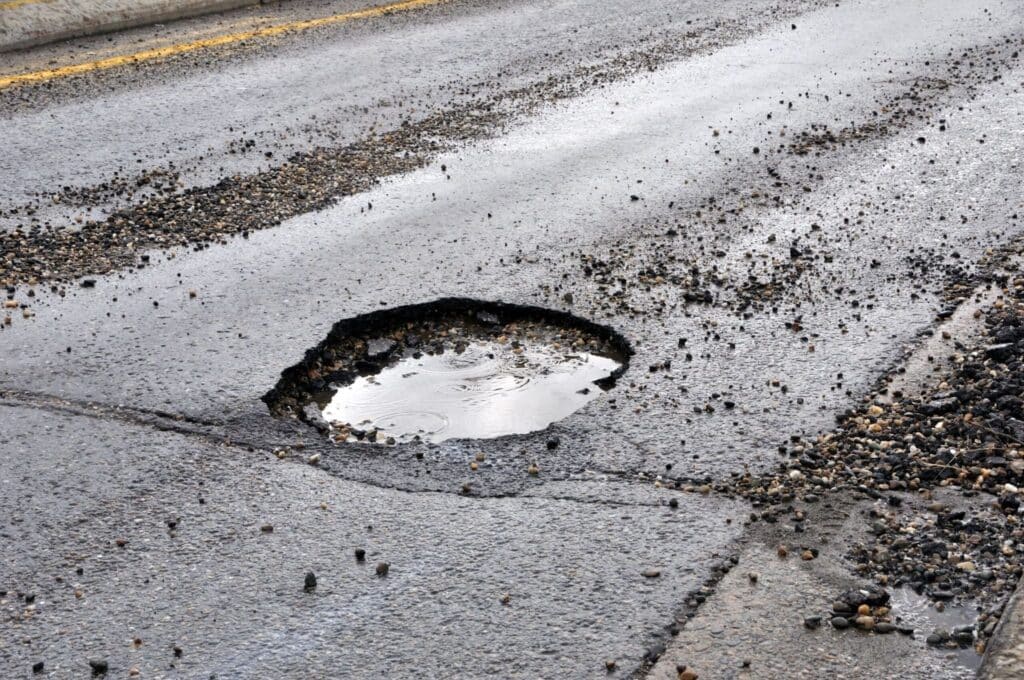
The inspection crew will then begin to measure several conditions. They’ll assess the overall smoothness of the road, as well as the comfort of driving on it. The majority of the PCI is determined by rating distresses. There are 19 types of distresses, which include:
- Alligator cracking
- Bleeding
- Block cracking
- Bumps and sags
- Edge cracking
- Lane/shoulder drop-off
- Potholes
- Rutting
- Swell
- Weathering and raveling
The survey team will then measure the severity level (low, medium, or high) and quantity for each distress level within the sample size of pavement. These numbers will determine the final PCI.
Again, since many of these signs are identifiable by an experienced asphalt paving crew, a visual inspection may be enough for your project. If you’re not sure whether you need a PCI consultation or just a visual inspection, call Asphalt Doctors to get the right advice for your project.
What Should I Do with My PCI Score?
Let’s say your pavement gets a PCI of 72. What does that mean for you?
First, you’ll want to see where your PCI falls in the seven categories. A score of 72 would put you in the “Satisfactory” range. PCIs in the “Good” and “Satisfactory” ranges often only need preventative asphalt maintenance. However, since you’re in the lower end of the “Satisfactory” range, you may need a few repairs, such as crack sealing.
If you fall in the “Fair” or “Poor” ranges, your pavement will likely need more extensive renovations. This could include an asphalt overlay, which adds a new layer of pavement over an existing surface with cracks or potholes.
If your PCI is 40 or below, you’re likely going to need to replace your pavement.
How Will a PCI Survey Save Me Money?
Pavement doesn’t age in a linear pattern, getting X% worse every year. Instead, many factors, such as weather, traffic level, and installation quality, affect how it declines. Each pavement eventually reaches a point called “critical condition,” after which the asphalt will deteriorate rapidly.
While each pavement’s critical condition is unique, it often happens around the “Fair” range of 56–70 PCI. If you perform a PCI survey before reaching this stage, your repairs will be much less extensive. After your pavement has passed its point of critical condition, you’ll be faced with much more expensive repairs or a full replacement.
Trust Asphalt Doctors with Your Pavement Needs
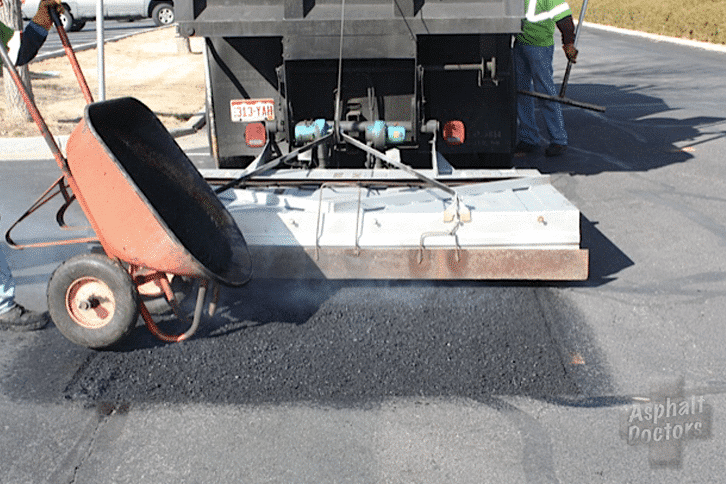
Regular maintenance is one of the best ways to keep your PCI high. At Asphalt Doctors, we provide every type of asphalt upkeep and repair your surface could need to keep it healthy for as long as possible. Get your free quote today to see how we can extend the life of your pavement.