
Owning one property is already stressful enough because things are fine until they’re suddenly not. You find one issue, which escalates to three issues, which escalates to too many to count.
Investing in additional properties means more pressure, more time, and more expenses. Multiple problems may spring up among four different properties, leaving you thinking: What problem do I tackle first?
The best approach to property management is proactivity. Creating a maintenance program for each building is critical to preventing catastrophic structural or foundational issues that can devastate property value and curb appeal. One of the top maintenance tasks to feature in your program is driveway and parking lot maintenance.
Most commercial properties feature asphalt lots or driveways because asphalt is strong, easy to install and repair, and it handles Colorado’s freeze-thaw cycles better. Although asphalt is durable, it does need maintenance every few years.
How to Tell When You Need Asphalt Maintenance
Schedule an inspection if you notice any of the following:
- Potholes
- Sinking areas or major depressions
- Crumbling surfaces
- Standing water
- Surface cracks
As a best practice, we recommend inspecting your driveways and lots after winter and note any of the above signs.
Critical Issues That Need Immediate Attention
One of the most challenging decisions as a property owner is knowing which issues need your immediate attention (and money) and which ones could be put on the backburner until your budget bounces back.
Potholes
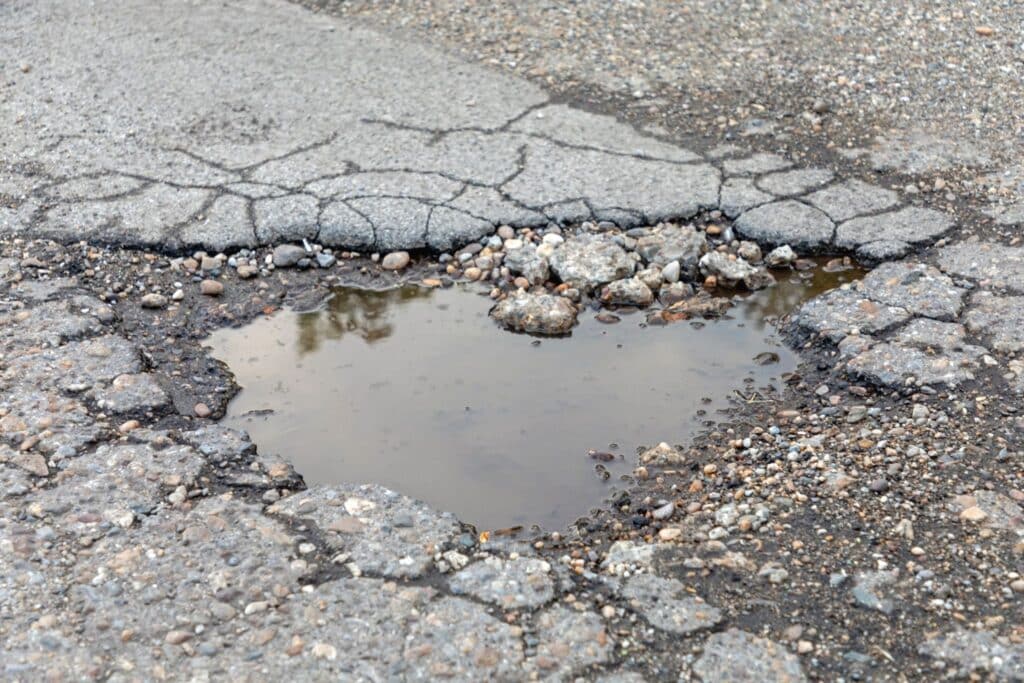
Potholes are a significant warning sign that your asphalt is failing. Over time, asphalt can weaken and when used in high-traffic areas like parking lots, traffic load can cause the weakened spots to break.
Holes in the asphalt aren’t just ugly. They’re a safety risk for drivers. If you don’t take care of the problem, customers could damage their tires or misalign their wheels or trip when they’re walking to your storefront. Potholes will only get worse over time, so you need a professional to fill and seal them.
Sinking or Uneven Spots
Like potholes, sinking and uneven areas are safety risks and can result in tire damage and slip-and-fall injuries. They occur when cracks and depressions aren’t addressed and the asphalt’s sub-layer collapses. Depending on the severity of the damage, full-depth patching (R&R) may be the most cost-effective option.
Alligator Cracking
Small cracks will eventually need to be addressed because they’re openings for water intrusion, and over time, can lead to fatigue cracking (also called alligator cracking), a spider web of lines that can turn into potholes. If you catch them early, you can fix them with a more cost-effective repair method: crack sealing.
Raveling
“Raveling” is what we call asphalt that’s deteriorating. You’ll know it’s deteriorating because there’s no binder left to hold the asphalt materials together, leaving loose gravel and aggregate stone everywhere. Deteriorating asphalt, like everything else, can pose safety risks for pedestrians and employees, especially because once deterioration starts, it evolves rapidly.
Issues That Can Wait
As a general rule of thumb, we recommend getting most issues inspected/taken care of eventually, but there are a few low-risk issues that don’t require your immediate attention.
Small Surface Cracks
If there are small cracks (around or smaller than ¼ inch), write it down as a concern, but don’t prioritize it over something critical like potholes or depressions. You can fix small cracks yourself with crack filler, or wait and schedule professional crack sealing and sealcoating services, which will add multi-year protection to your lots and/or driveways.
Minor Depressions
Minor depressions (emphasis on minor—if it’s sinking, schedule repairs immediately) can be fixed with small patching, but will eventually need to be addressed on a larger scale. If your budget is tight, make a note that you will need to schedule R&R/full-depth patching eventually.
Fading
Fading is both an aesthetic issue and an ADA compliance risk if striping is faded, too. Faded ADA markings can have legal and financial consequences, so they shouldn’t be put off for too long, depending on the severity of the fading. This issue can be easily resolved with line striping and sealcoating services.
Crumbling Edges
Crumbling still isn’t a good sign because it means the asphalt is losing structural support, but edge repairs are far less expensive than fixing severe longitudinal or alligator cracking. All that’s needed is crack sealing and/or patching.
A Checklist for Determining Priority
- High-Priority: It poses a safety risk to yourself, your employees, your customers, and any other individuals on your property.
- Medium-Priority: The problem is going to escalate and needs a temporary fix.
- Low-Priority: The problem can be addressed during basic maintenance (e.g. sealcoating).
Don’t Put Off Maintenance—Schedule Repairs Today
Staying on top of maintenance is the best way to lower your repair budget, reduce safety risks and liabilities, and prevent unnecessary downtime. Asphalt Doctors helps commercial property owners throughout Northern Colorado and the Front Range take care of their driveways and lots. As a full-service contractor, we offer maintenance programs, crack sealing, patching, sealcoating, installation, milling, and more.
If you’ve noticed issues, contact us now to request a project estimate.