
For commercial property owners, a parking lot is more than just a necessary space for employees and customers; it’s a crucial asset that impacts safety and appearance, and it can add high maintenance costs when quality-control measures are underestimated.
The correct type of grading and installation techniques are essential, but long-term commercial asphalt paving performance and lifespan depend heavily on two key quality-control measures: density testing and mix design verification.
Why Compaction Density Matters
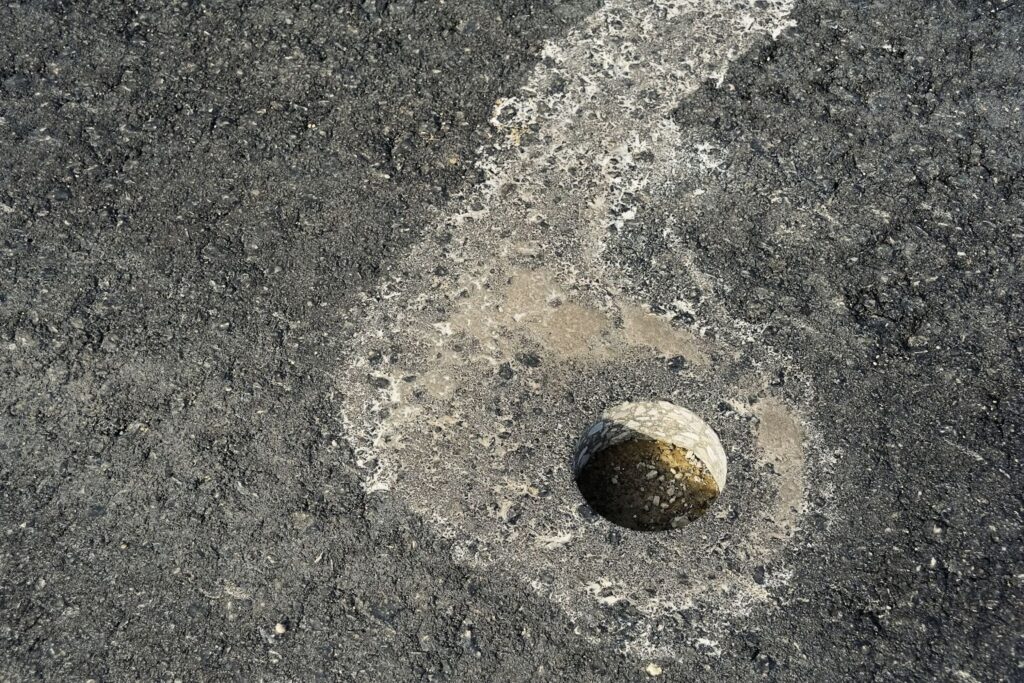
Compaction density is a critical factor for asphalt pavement performance. Asphalt must be compacted to a specific density range to reduce air voids, which lowers oxidation, moisture intrusion, and shear deformation; together creating greater structural integrity. When pavement is under-compacted, water and air penetrate the surface and accelerate oxidation, weakening the asphalt binder and allowing premature cracking and potholes.
While under-compaction can create a number of issues, over-compaction causes its own problems. When pavement is over-compacted, there is reduced flexibility, leading to flushing and bleeding, especially during warmer months. The goal is between 92-96% maximum density, balancing the strength and flexibility for even vehicle load distribution and moisture resistance.
Continuous testing of compaction density during a paving project is critical to verify the job is done correctly. However, it also helps the client with:
- Substantial savings on future repair costs by resolving issues found during construction.
- A longer service life by verifying the asphalt’s durability, ability to withstand traffic, and resilience against environmental conditions.
- Enhanced safety by ensuring proper traction capability.
Field Density Testing Methods
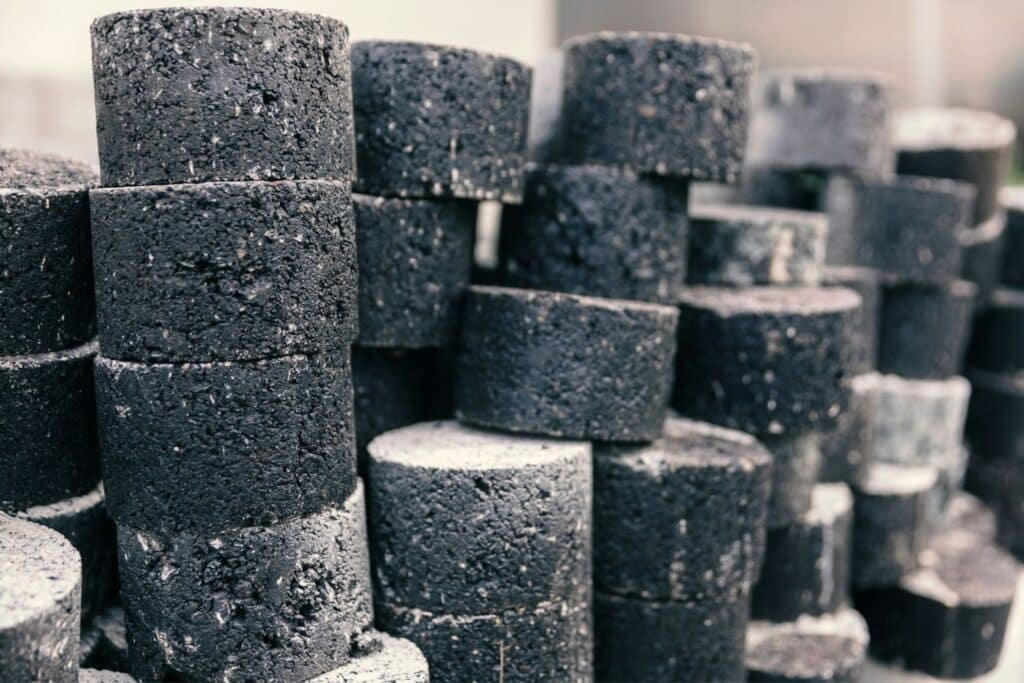
To ensure the goal density is met, asphalt contractors should use field testing throughout the paving process. The two most common methods are:
- Nuclear Density Gauges: This testing provides immediate and non-destructive measurements of in-place asphalt density. The devices allow the team to adjust rolling patterns and compaction efforts in real time, ensuring consistency across the entire lot. Nuclear density gauges are used most often because they’re fast and efficient; they’re usually the primary quality-control tool during paving.
- Core Sampling: While far more invasive, it is highly accurate. Core sampling uses cylindrical samples extracted from the finished pavement and tested in a lab to confirm the density, air voids, and asphalt content. Since this testing requires a finished area, takes time, and cuts into pavement, it is primarily used to validate nuclear gauge readings and provide documented proof that the pavement meets project specifications.
Why Mix Design Verification is Important
While the right compaction is key, if the mix design is incorrect, then the asphalt performance will suffer despite the density. Mix design verifications ensure that the asphalt used for the lot meets engineering requirements for the climate conditions, traffic loads, and intended use.
A properly designed asphalt mix will have the correct proportions of aggregate, asphalt binder, air voids, and other elements that allow for flexibility, strength, and resistance to aging. Before a paving project begins, contractors will verify that the mix meets the approved design standards and that the plant-produced asphalt matches those specifications. During the project, samples should be taken to continuously confirm consistency and avoid compromising performance.
How Long Properly Installed Asphalt Should Last
When density targets are met, the correct mix design is used, and the proper techniques are implemented, a parking lot’s lifespan can be 20 to 30 years, depending on traffic volume and maintenance practices. Routine sealcoating, crack filling, and timely repairs can all extend service life while reducing long-term costs.
Asphalt Doctors Check Their Work
Here at Asphalt Doctors, we make sure we’re paving the right way the entire way. We verify the asphalt mix, use both field density testing methods, and test continuously so you know your lot performs throughout its service life. We are the go-to experts for businesses across the Denver metro area and use state-of-the-art equipment in every paving project.
Contact us today to schedule an inspection or request a quote—we’ll keep your parking lot strong for years to come.